

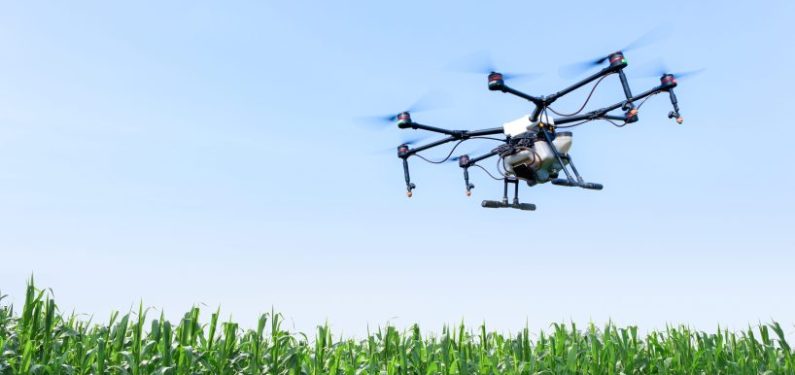
What to Consider With Drones and Agribusiness
June 11, 2026Managing agriculture is no easy feat. Effective resource management is essential, which makes tools and processes that assist with productivity, efficiency, yield, and profitability high priorities. Agriculture technology (AgTech) merges advances in technology with agricultural demands to create innovations that make managing ag operations more efficient. Agricultural drones can be powerful tools that help farmers monitor property, crops, livestock, and more with high-resolution imagery, 3D imaging, and sophisticated data collection capabilities. Here’s what to consider with drones and agribusiness, including uses, benefits, and insurance considerations:
How Can Drones Be Used in Agriculture?
Although there are evolving laws and regulations around drone use, farmers and ranchers usually need to become certified commercial operators with the Federal Aviation Administration (FAA) to use drones in their ag operations. Generally, a Part 107 certification and a Part 137 agricultural operator certificate are needed.
From monitoring to data collection and more, farming drones can be equipped with a variety of sensors and tool attachments for a variety of activities. They can be used in a lot of ways to benefit ag operators.
20 Helpful Agricultural Drone Applications
Here are some helpful ways drones can be used in agriculture:
- Surveying and mapping topography and boundaries.
- Monitoring the property perimeter.
- Inspecting the integrity of fences and structures.
- Obtaining high-resolution land images.
- Conducting ground heat mapping.
- Planting seeds in difficult terrain.
- 3D imaging for estimating crop height.
- Monitoring crop growth and health.
- Monitoring soil quality.
- Irrigation monitoring and leak prevention.
- Collecting water and soil samples.
- Proactively monitoring for water or soil contamination.
- Monitoring and tracking livestock movement.
- Herding livestock.
- Counting livestock.
- Checking and monitoring livestock temperatures.
- Identifying spraying needs.
- Adjusting spraying levels or frequency.
- Applying spot treatments of fertilizers or pesticides.
- Troubleshooting processes, workflows, and equipment.
20 Benefits of Using Agricultural Drones
Farming drones can cover large areas in a fraction of the time. Additionally, ag operators can use agricultural drones in a variety of ways to help streamline their operations. These are some of the benefits of using agricultural drones:
- Save time when monitoring the property.
- Get a birds-eye view of the entire operation.
- Collect images, data, and samples quickly and efficiently.
- Receive alerts, data, and insights in real time.
- Proactively monitor critical areas.
- Identify potential problems early.
- Save time and money on imaging.
- Provide better images with higher resolution.
- Obtain updated images multiple times throughout the season.
- Get a clearer picture of soil quality and overall crop health.
- Monitor for pest infestations or diseases more efficiently.
- Monitor and track livestock health with thermal imaging.
- Assist with troubleshooting.
- Improve safety, reduce risk, and protect workers.
- Assess damage safely after a storm.
- Reduce chemical drift or runoff during spraying.
- Reduce emissions and risk of pollution liability.
- Improve overall yield.
- Reduce overall operating costs.
- Increase return on investment.
Insurance Considerations For Drones and Agribusiness
As with any high-value equipment, it’s important to consider insurance and to make sure you have sufficient coverage to protect your investment. You will need to properly insure a drone for business use, and particularly for agricultural use. This is especially true for farming drones that tend to have extra features and are important to the day-to-day operations of your agribusiness.
Drone use can also be one of the reasons why you need additional liability coverage for your ag operation. Agricultural drone insurance coverage must provide protection against risks, like equipment damage, third-party liability, chemical drift, and more. These are also risks that can carry heavy and expensive consequences, which only makes it even more important to have coverage to address them. Some insurance considerations to keep in mind for drones and agribusiness include:
- Obtain coverage for key components of agricultural drone insurance.
- Be aware of policy limitations and exclusions.
- Make sure policy limits are sufficient.
- Take proactive steps to reduce risk.
6 Key Components of Agricultural Drone Insurance
Every ag operation is different, and insurance can vary depending on your operation, your location, the type of farming drone you have, what you use it for, and more. A conversation with your insurance agent is a good place to start for determining what coverage you need for your specific farming drones and situation. Core components of agricultural drone insurance can include:
- Drone Physical Damage (Hull Damage) to protect against risks of theft or damage from weather or crash.
- General Liability Insurance to protect against property damage or bodily injury not associated with chemical drift should a drone collide with something or someone.
- Pollution Liability Insurance (Chemical Drift/Payload Liability) to protect against damage caused by chemical runoff or drift to surrounding properties.
- Payload Insurance to protect against damage to additions mounted on the drone or assets the drone is carrying, like high-value sensors, special camera lenses, spray systems, sampling buckets, high-value liquids, etc.
- Errors & Omissions Insurance (E&O) to protect against damage or injury caused by pilot or drone error in application, data analysis, or flight planning.
- Aviation Insurance to provide coverage for larger operations running multiple agricultural drones or using manned aircraft in addition to farming drones.
Be Aware of Policy Limitations and Exclusions
There are a lot of considerations that come with drones and agribusiness, and it’s important to be aware of policy limitations and exclusions when obtaining insurance coverage. Aerial spraying is generally not included on standard farm insurance policies.
If coverage is offered, it is usually done via a specialized drone policy. Some insurers may offer limited drone coverage as an endorsement to existing policies, but this may not provide all the coverage you need. It depends on your situation, the insurers available in your market, and the specific policy options available to you. Your insurance agent will be able to walk you through your options and help you choose the best insurance coverage for your unique situation.
There may also be chemical liability tiers that exclude or limit the types of farming chemicals covered. Depending on the insurer and the policy, chemical liability may be:
- Excluding Chemical (XC), which means the coverage extends to only seed or dry fertilizers.
- Limited/Restricted (LC/RC), which means the coverage extends to insecticides and fungicides.
- Comprehensive (CC), which means the coverage extends to all farming chemicals, including desiccants.
Make Sure Policy Limits Are Sufficient
Another insurance consideration for drones and agribusiness is to make sure the policy limits are high enough to cover expensive components and high-value payloads. For example, a farming drone that assists with spraying will have specialized sprayers and will be carrying high-value fertilizers, pesticides, etc.
These are high-value liquid payloads that are essential to your ag operation and would have costly consequences if they were compromised. You want to make sure they are sufficiently covered on your insurance policy and that the limits are appropriate.
Usage of the drone also makes a difference. Some operations carry higher risks than others, and this can make a difference in what coverage limits need to be in place for your operation. It’s important to talk to your insurance agent about the different ways you plan to use farming drones to ensure you have the right coverage and enough of it.
Take Proactive Steps to Reduce Risk
Insurance is all about managing risk. Proactively implementing measures to improve safety and reduce risk can have benefits when it comes to your insurance policy, too. The same concept applies to drones and agribusiness as well.
Similar to how more experienced drivers with a track record of no accidents or claims tend to have a lower auto insurance premium than new drivers or drivers with a record, more experienced drone operators without a history of claims can be rewarded with lower premiums or policy perks when insuring their drones.
Other things you can do to proactively reduce risk and potentially lower drone insurance premiums include:
- Obtaining and maintaining pilot certification.
- Recording flight hours and keeping detailed flight records.
- Completing ongoing training.
- Keeping a record of regulatory compliance.
- Regularly inspecting and maintaining farming drones.
- Completing pre-flight checklists.
- Proactively monitoring weather conditions.
- Having established procedures for emergency landings and other situations.
- Establishing communication protocols with neighbors to reduce misunderstandings or miscommunications.
Make Sure Your Ag Operation is Fully-Insured
These are just a few things to consider around drones and agribusiness. Agricultural drones can help ag operators use precision agriculture to increase efficiency and improve yields. They may even be able to reduce operating costs. In addition, the use of farming drones can reduce risk and improve safety in your operations.
New equipment will need to be included in your farm insurance policy. Depending on your policy, additional coverage may be needed to properly insure farming drones and other precision agriculture equipment. However, reducing risk and improving safety in your operations can reduce your risk of having to file a claim and can even make you eligible for discounts or rewards related to your insurance coverage.
If you need to review your farm insurance policy or need to explore coverage for your ag operation, contact Ruhl Insurance, a Division of Horst Insurance, at 717-665-2283 or 800-537-6880. We can help you navigate commercial agribusiness insurance for your unique operation and needs.
Disclaimer: Information and claims presented in this content are meant for informative, illustrative purposes and should not be considered legally binding.